Salt air looks dreamy, but it is tough on a home’s exterior. If you live near the Delaware coast or you’re eyeing a beach-area property, you’ve likely seen paint fade faster, metal stain, and hardware rust. The good news is you can choose finishes that stand up to salt and plan simple maintenance that protects your investment. In this guide, you’ll learn which materials work best in Delaware’s marine climate and how to care for them over time. Let’s dive in.
Why salt exposure matters in Delaware
Salt reaches your home through sea spray and fine aerosols carried by wind. Exposure is strongest on wind-facing and shoreline sides and drops with distance inland, though studies show measurable effects can persist from hundreds of feet to miles depending on wind and topography. Reviewers note a rapid falloff in the first few hundred meters, so matching your selections to your property’s exposure is key. Peer-reviewed research on salt spray distribution explains this pattern.
Delaware’s coastal towns and bays see high humidity, nor’easters, and storm surge. Local experts urge homeowners to treat salt exposure as a predictable stressor and plan for resilience. You can explore coastal hazards and proactive planning in Delaware Sea Grant resources.
Choose salt-smart materials
Metals and fasteners
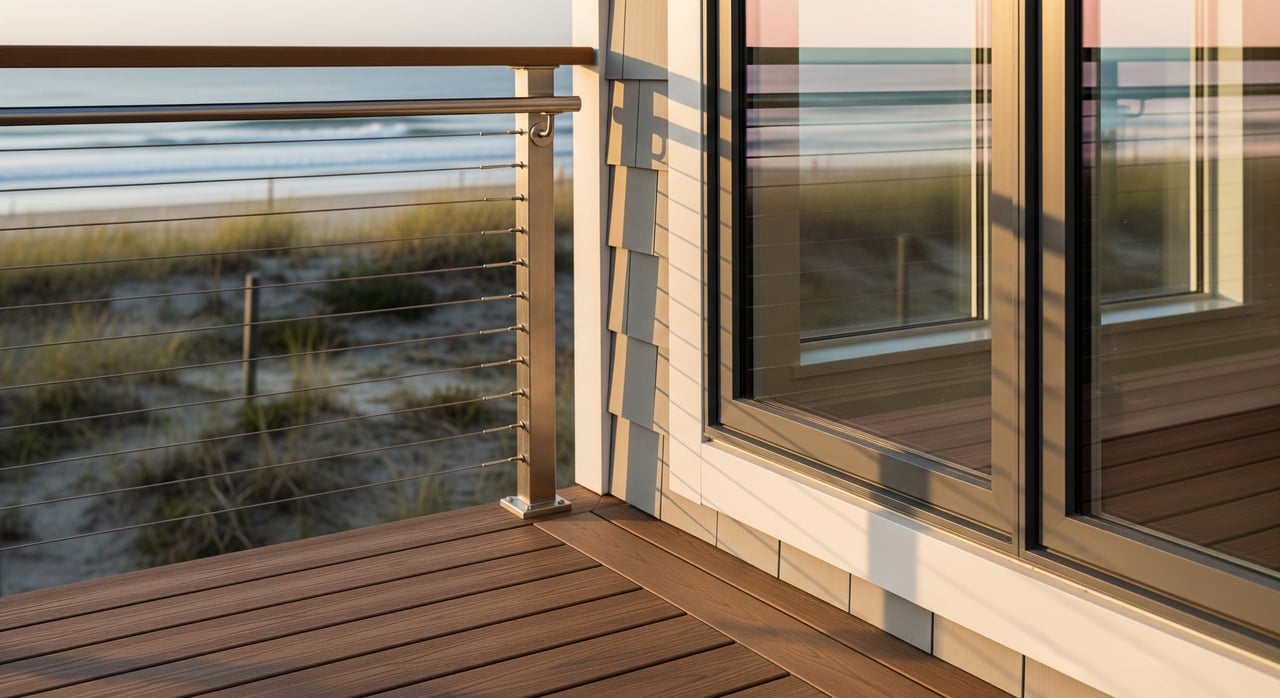
If your home is near salt water, prioritize corrosion resistance from the start. For decks and exterior attachments within roughly 300 feet of saltwater, code commentary and inspectors often point to stainless steel fasteners and connectors as a best practice. Learn more from the International Code Council’s guidance on coastal deck corrosion.
For stainless, pick the right grade. Type 316 (marine grade) contains molybdenum and resists chloride pitting better than 304, so it is the go-to for splash and direct spray zones. Type 304 can work in more sheltered locations but will show corrosion sooner in salty air. See the corrosion comparison of 304 vs 316 stainless.
Siding, trim, and paint
Use high quality exterior paints designed for moisture, mildew, and UV. Many brands offer lines labeled for coastal or marine atmospheres with flexible binders and added mildewcides. For example, Benjamin Moore lists exterior systems formulated for tough climates in its coastal-grade paint literature. Expect shorter life on windward facades and plan touch-ups sooner there.
For metal roofs, fascia, and trim, factory-applied PVDF coatings are the gold standard for long-term color and corrosion resistance. Look for PVDF systems meeting AAMA 2605, often marketed under Kynar 500. Learn more about PVDF performance for metal architecture.
On bare or painted ferrous metal, a high-performance system matters. An epoxy or zinc-rich primer followed by a durable polyurethane or fluoropolymer topcoat is a proven approach for marine atmospheres. This is especially useful on railings, steel stairs, and exposed brackets.
Wood and decking
Naturally durable woods like cedar, cypress, or dense tropical hardwoods typically outperform untreated softwoods in coastal settings. Composite and PVC decking avoid rot and reduce maintenance, though performance varies by brand. See an overview of decking material options and choose products with a track record near the coast.
For exterior wood finishes, penetrating oil-modified stains or marine spar varnishes help manage moisture and UV. Expect more frequent refresh cycles on wind-facing decks and trim.
Masonry and stucco
Porous masonry can take in salts and moisture, which leads to efflorescence and surface damage over time. Use breathable silane or siloxane sealers that reduce water and chloride ingress without trapping vapor. See chloride-screening repellents like Prosoco’s Saltguard VOC. Manage drainage and splash-back to limit rewetting.
Mechanical systems
Outdoor HVAC, generators, and pool equipment live a hard life in salt air. Look for cabinets with durable powder coats and coils with anti-corrosion coatings. Increase inspection and cleaning frequency for near-shore units. Many coastal HVAC pros recommend a light fresh-water rinse monthly and more frequent professional service on exposed equipment. Practical tips are outlined in this guide to prevent coastal corrosion on AC units.
Detail choices that reduce wear
Good detailing slows corrosion and keeps finishes looking sharp.
- Provide clear drainage paths. Slope flat surfaces away from the home and use drip edges and through-wall flashing to limit salt-laden water sitting on surfaces.
- Isolate dissimilar metals. If different metals must meet, use insulating washers or separators to avoid galvanic couples and premature corrosion.
- Plan for sacrificial parts. Use replaceable hardware for high-wear items like handrail brackets and gate latches. Stainless or high-grade coated fasteners pay off where exposure is highest.
Maintenance that preserves value
A simple coastal schedule
A little routine care goes a long way.
- Inspect exteriors yearly. Check paint adhesion, caulk joints, gutters, rails, and flashing. Look for pitting and salt crust, especially on windward sides. A short annual review helps spot issues early, as noted in this roofing guide on preventing salt-air damage.
- Rinse with fresh water. Flush siding, decks, windows, and railings at least 1 to 2 times per year. Near direct spray, rinse monthly to bi-monthly. Avoid high-pressure washing that can strip coatings.
- Touch up coatings quickly. Chips and scratches are failure points. Many coastal homes need repainting or major touch-ups every 3 to 7 years in exposed areas, depending on product and exposure. See guidance on typical repaint intervals.
- Service mechanicals more often. For close-to-shore HVAC, plan monthly visual checks and rinses, with professional coil cleaning quarterly to semi-annually. Review practical steps in this article on coastal HVAC care.
Smart questions for buyers
If you are considering a coastal Delaware home, ask sellers for maintenance documentation. Look for recent exterior work, product details for coatings, and service records for HVAC and other outdoor equipment. Delaware Sea Grant encourages homeowners to document resilience measures, which helps you understand true upkeep needs. Explore Delaware coastal hazard resources.
Delaware codes and notes
Model code updates and local amendments guide material choices near salt water. The International Code Council highlights stainless requirements for certain deck applications and calls for corrosion-resistant fasteners in treated wood, especially close to shore. See ICC’s article on red rust warnings for coastal decks. Always confirm specific requirements with your local building department before starting a project.
Ready to choose finishes that last?
With the right specifications and a predictable care plan, your Delaware coastal home can look great and perform well for years. If you are weighing finish options before listing or want help prioritizing updates for a near-shore purchase, let’s talk through the smartest moves for resale and long-term value. Connect with Alisa Goldsmith Properties for design-forward guidance and a confident next step.
FAQs
How far inland do coastal salt effects reach in Delaware?
- Salt exposure is highest within the first few hundred meters of the shoreline, but measurable effects can extend hundreds of feet to miles based on wind and topography. See this review of salt spray distribution.
Which stainless steel grade is best for beach-area hardware?
- Use Type 316 for splash and direct spray zones. Type 304 can work in sheltered spots but pits sooner in salty air. Compare grades in this 304 vs 316 overview.
Are coastal-rated paints and metal coatings worth it?
- Yes. Exterior systems formulated for marine atmospheres and PVDF-coated metal roofing keep color longer and resist corrosion, reducing major repaint cycles. Learn about PVDF performance and see an example of coastal-grade exterior paint.
How often should I rinse and repaint near the shore?
- Rinse siding and railings 1 to 2 times per year, increasing to monthly in direct spray areas. Many exposed homes need repainting or major touch-ups every 3 to 7 years. See care tips on salt-air damage prevention and repaint intervals.
What maintenance records should I request when buying a coastal Delaware home?
- Ask for documentation of exterior coatings and primers used, dates of paint or sealant work, and service records for HVAC and outdoor equipment. Delaware Sea Grant offers context on coastal hazards and resilience.