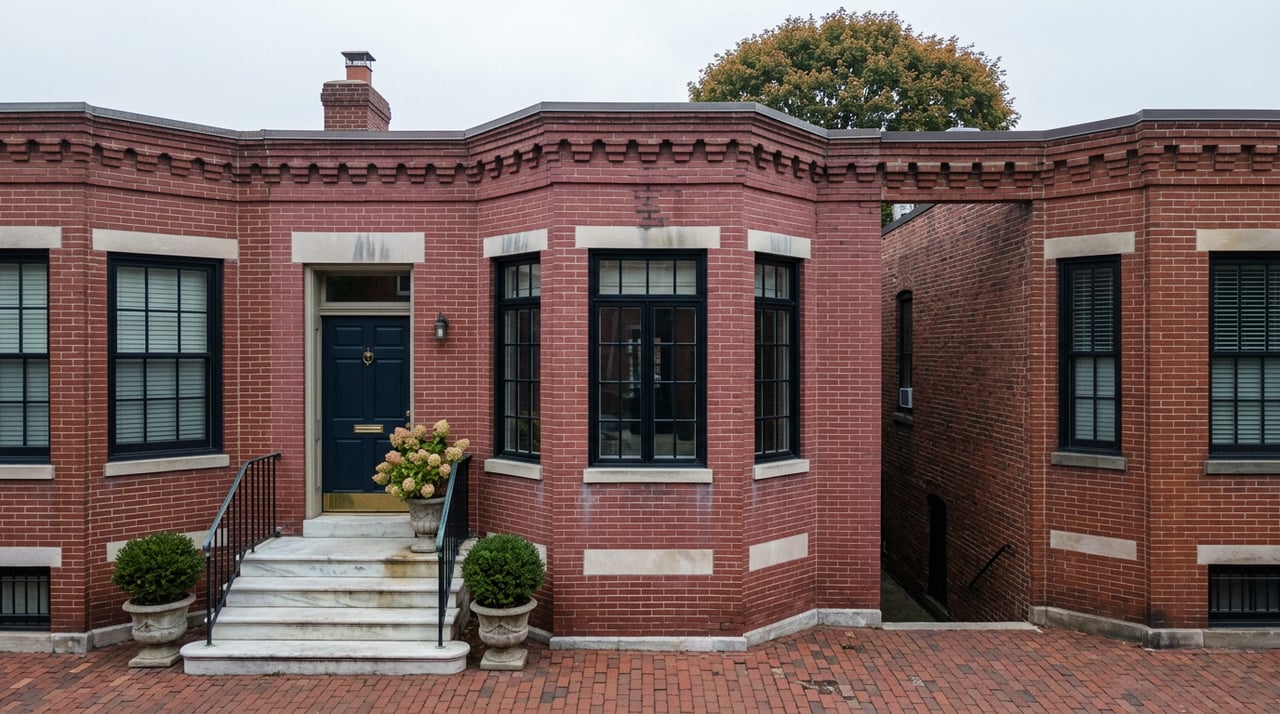
A title search comes back on a rowhouse under contract in Fells Point or Federal Hill, and one line stops the read: subject to ground rent. The number attached to it, usually somewhere between $50 and $150 a year, is almost never the part that threatens the deal. What threatens it is how long it takes to find out who is actually owed that rent, because the lease was probably signed decades before anyone currently involved in the sale was born, and it has likely changed hands more than once since.
What Ground Rent Actually Is, and Why It's a Baltimore Thing
According to the People's Law Library, in a fee simple purchase, the buyer owns the house and the land under it outright. A ground lease splits that ownership: the homeowner owns the structure, and a separate party owns the land beneath it, collecting an annual or semiannual payment for it. Baltimore developers used the structure as a financing tool going back to the city's earliest rowhouse blocks, letting a buyer purchase the building without also fronting the cost of the land, which kept homeownership within reach for more people building out the city's rowhouse neighborhoods between roughly 1880 and 1970.
That history is why ground rent still shows up concentrated in Waverly, Hampden, Govans, Remington, Pigtown, Brooklyn, and large stretches of East and West Baltimore. It also shows up, less expected, in some of the city's more upscale addresses. Roland Park carries a number of legacy ground rent properties despite being one of Baltimore's premier neighborhoods, which is worth knowing before assuming the phrase only applies to older working-class rowhouse blocks.
As of September 2026, ground rent appears on roughly 27 percent of Baltimore City parcel records, about 65,000 of the city's 238,000 parcels, according to Open Baltimore's real property data. The median annual amount is $90, and more than 90 percent of those rents run $120 a year or less. On paper, that is a small recurring bill. In practice, it is a title item that can create friction.
The Redemption Math, Worked Through
Maryland Real Property § 8-804 sets the price to buy out, or redeem, a ground rent using a formula tied to when the lease was created. The annual rent gets divided by a capitalization rate assigned to that era, which for many mid-century Baltimore leases works out to 6 percent, producing a multiplier of 16.66.
| Step | Example |
|---|---|
| Annual ground rent | $90 |
| Lease era | 1925 |
| Capitalization rate | 6 percent |
| Multiplier | 16.66 |
| Redemption cost | $1,499.40 |
Add any unpaid back rent and recording costs on top, and the total redemption on a typical Baltimore rowhouse still lands well under $2,000. Set against Baltimore City's median sale price of $225,000 in August 2026, per Maryland Realtors' Bright MLS data, that redemption cost comes to less than 1 percent of the sale price. The dollar figure is not what makes ground rent a topic worth a full conversation with a title company before you write an offer.
The Part That Actually Stalls a Closing
Maryland banned the creation of new residential ground leases as of January 22, 2007, under the state's Real Property Article. Every ground rent still active today predates that law, which means every one of them is a legacy instrument that has had years, often decades, to change hands. A lease created in 1935 has commonly been inherited, split among heirs, sold to an individual investor, or bundled into a portfolio and sold again to a company that has since merged or renamed.
The state's Ground Rent Registry, maintained by the Maryland Department of Assessments and Taxation, exists to make the current holder findable. Not every ground rent is registered, though, and a search that comes back empty does not mean the rent does not exist.
Locating the current holder, confirming the exact payoff amount, and getting a signed release recorded can take anywhere from the same day to several weeks, depending entirely on how responsive that holder turns out to be.
Two Wrinkles Worth Confirming Before You Sign Anything
Maryland's Department of Assessments and Taxation says a Notice of Intention to Preserve Irredeemability had to be filed in the land records and renewed by April 1, 2023. Any irredeemable ground rent that did not get renewed by that date is now redeemable. A rowhouse whose old paperwork says the ground rent can never be bought out is worth a second look rather than an assumption that the label still holds.
What This Means Before You're Under Contract
Once a ground rent shows up on a title report, the sequence that keeps a closing date intact usually looks the same. Check the SDAT Ground Rent Registry first, and if it comes back empty, pull the original deed from Maryland Land Records rather than treating a blank search as confirmation there is no rent. Request a written payoff or estoppel statement from the current holder as early as possible, since that document is what a title company will use to prepare the release, and recording that release is what actually finishes redemption. Tell the lender the property carries a ground rent the moment it is identified, in writing, so their requirements are known before the appraisal comes back rather than after.
For owners who qualify, Maryland's Department of Housing and Community Development runs a Ground Rent Redemption Loan Program offering 0 percent interest. Eligibility requires the property be the owner's primary residence.
If a ground rent shows up on a title report for a home you're buying or listing in Baltimore City, Alisa Goldsmith Properties can help you sort the redemption math and the timeline before it becomes a closing-week surprise. Schedule a free consultation.
This article is general information, not legal, tax or financial advice. Consult a qualified professional about your situation.